
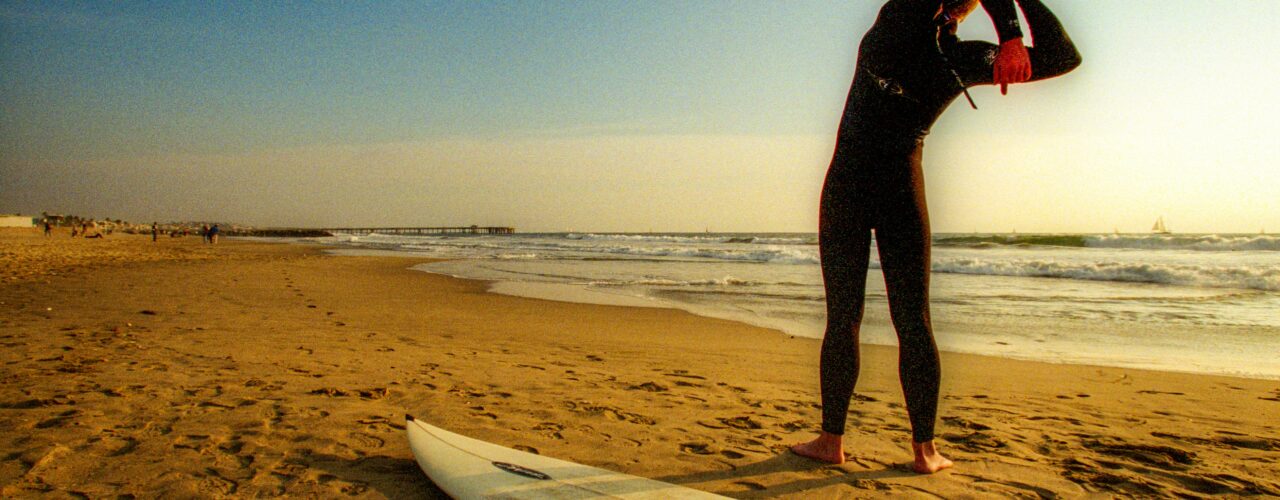
A day at the beach can be surprisingly demanding on your body. You might spend the morning surfing, swim for an hour, paddleboard along the coast, play volleyball in the sand, or carry chairs and coolers from the car. Even a long walk along the shoreline asks your muscles to work differently than they do on solid ground.
That extra activity can leave you with tight shoulders, tired legs, or beach back pain later in the day. A little preparation can help. Stretching and warming up before you get active, followed by slower stretches afterward, can help maintain mobility and reduce some of that post-beach stiffness.
Why Beach Activities Can Leave You Feeling Sore
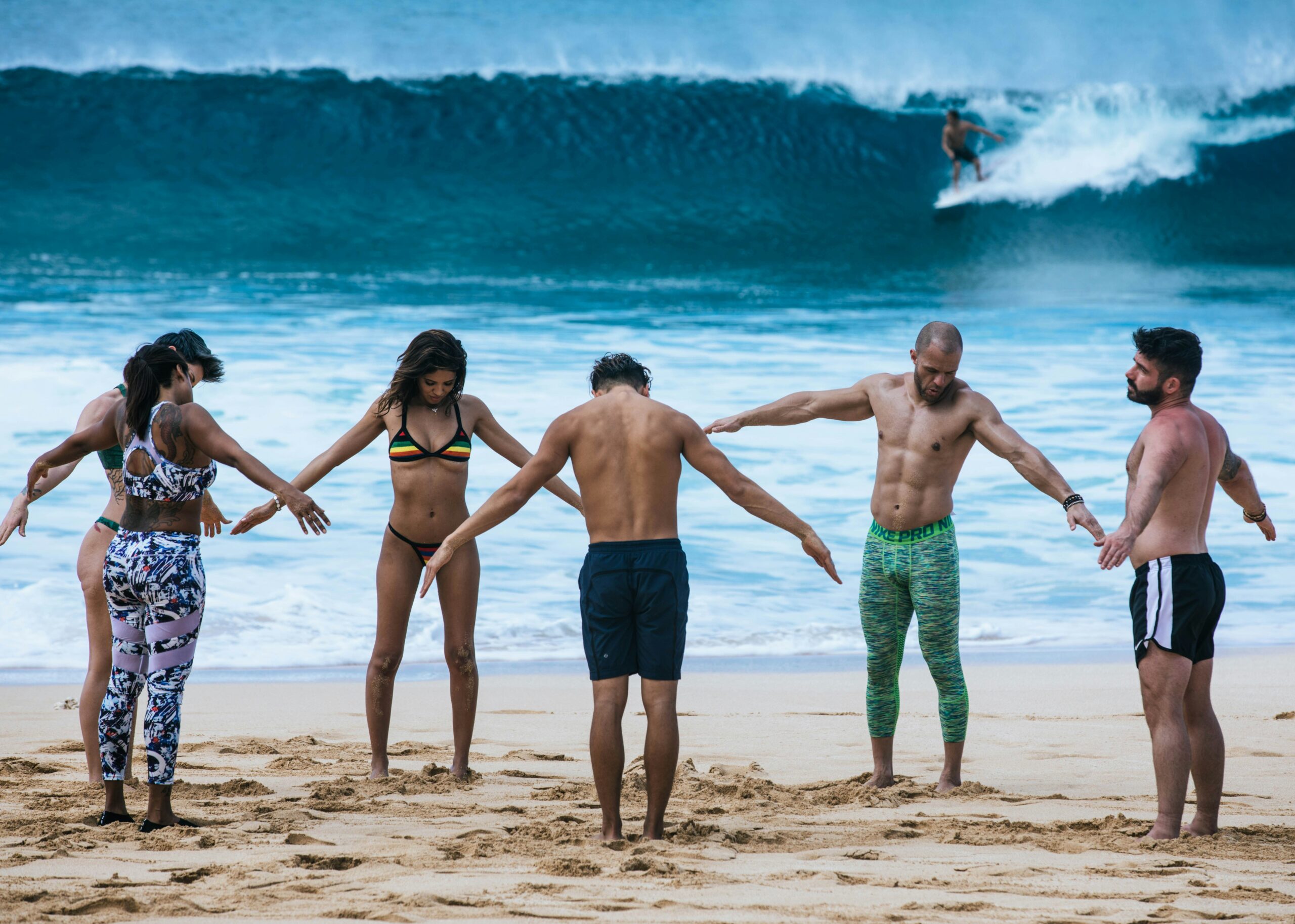
Sand creates an unstable surface, so your ankles, legs, hips, and core have to make constant adjustments while you walk or run. Add swimming or paddleboarding, and suddenly your shoulders, back, and core are working hard too.
Surfing presents another set of challenges. Paddling involves repetitive shoulder movement while the back remains extended, followed by quick transitions from lying down to standing. After a few hours in the water, it is easy to understand why surfers may leave the beach feeling tight through the neck, shoulders, hips, and lower back.
If you spend much of your week at a desk, jumping directly into several hours of weekend activity can make the difference even more noticeable.
Before The Beach: Focus On Movement
Before getting active, think about warming up rather than settling into long, deep stretches. Your muscles and joints need a chance to gradually prepare for the movements ahead.
Start with a few minutes of easy walking. From there, shoulder rolls and controlled arm circles can prepare the upper body for paddling and swimming. Gentle torso rotations help loosen the middle and upper back, while leg swings can get the hips moving before a long hike or an afternoon on a paddleboard.
Keep everything comfortable and controlled. You should feel your body becoming warmer and more mobile without forcing your joints into uncomfortable positions.
Get Your Hips And Back Ready
Hip mobility matters for almost every activity you will do at the beach. Your hips help stabilize you while walking through sand, standing on a paddleboard, and popping up on a surfboard.
One simple warm-up is a standing hip circle. With your hands on your hips, slowly move them in a controlled circular motion several times in each direction. You can follow that with gentle walking lunges, provided they are comfortable for your knees and hips.
For your back, try slow standing rotations. Keep your feet planted comfortably, soften your knees, and rotate your upper body from side to side without forcing the movement. The goal is to encourage comfortable motion through the spine before activity.
Give Your Shoulders Some Attention
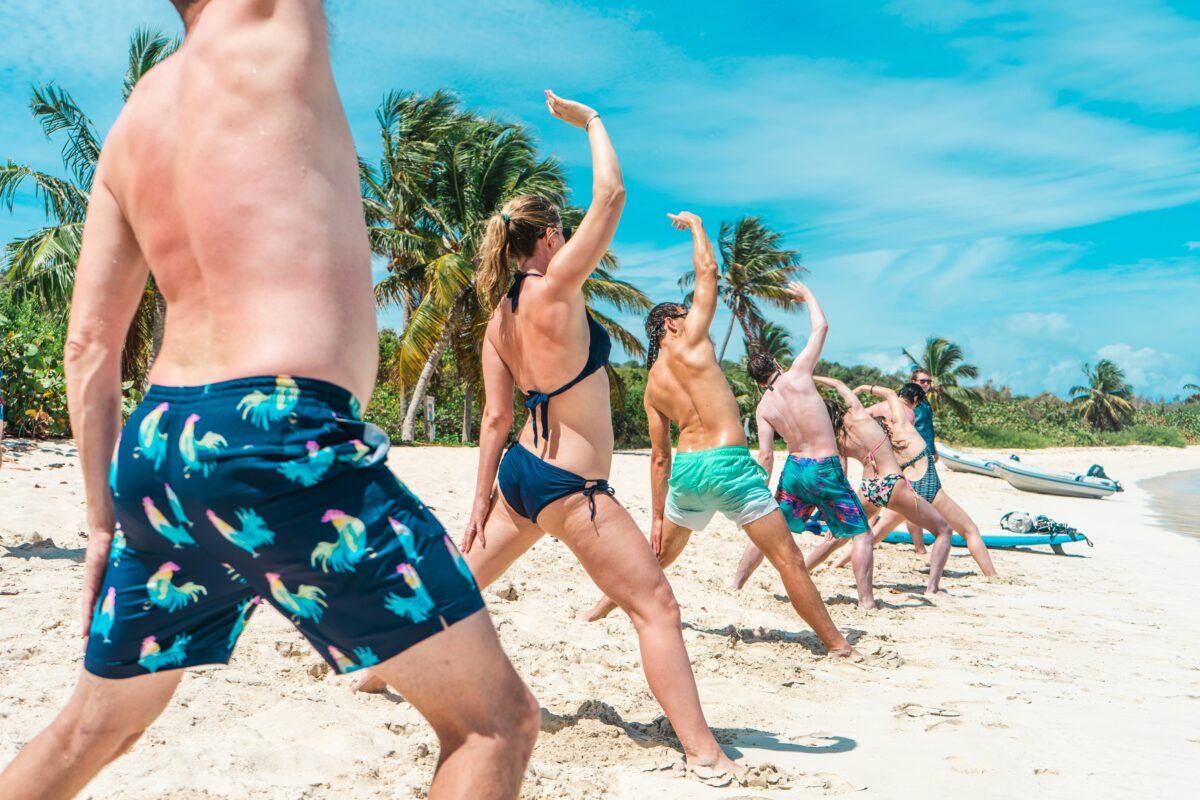
If swimming, surfing, or paddleboarding is on the schedule, your shoulders deserve a few minutes of preparation.
Start with small arm circles and gradually make them larger. You can also bring one arm gently across your chest, using the opposite arm for light support. Shoulder blade squeezes are another useful option. Draw your shoulder blades back toward one another, hold briefly, and release.
These movements can be particularly useful before surfing, where repetitive paddling places considerable demand on the shoulders and upper back.
After The Beach: Slow Things Down
Once the day’s activity is over, stretching serves a different purpose. Your muscles are already warm, so this is a better time for slower stretches that can help ease tightness.
A gentle hamstring stretch can feel good after walking through sand or spending time balancing on a board. Stretching the hip flexors can also help after surfing, particularly if your lower back feels tight from spending time in an extended paddling position.
For your upper body, gently stretching the chest and shoulders can provide some relief after repetitive swimming or paddling. Hold stretches for around 20 to 30 seconds and breathe normally. There is no benefit to forcing yourself deeper into a stretch if it starts to hurt.
Don’t Forget About Your Calves
Your calves work harder on sand than you might realize. With every step, the foot shifts and the lower leg responds to keep you balanced. After a long hike or a game played in the sand, that can add up.
A simple wall or standing calf stretch can help. Keep one foot behind you with the heel down and gently shift your weight forward until you feel a stretch through the back of the lower leg.
If you frequently experience tight calves after beach days, supportive footwear when you are off the sand may also help give tired feet and legs a break.
Know The Difference Between Soreness And Pain
Feeling tired or mildly sore after an active day is common. Pain that is sharp, persistent, or getting worse deserves more attention.
Recurring beach back pain can sometimes point to mobility restrictions, muscle imbalances, or movement patterns that become more noticeable during physical activity. If the same area hurts every time you surf, swim, or paddleboard, stretching alone may not address what is contributing to the problem.
Chiropractic care can help evaluate joint mobility and how different areas of your body are working together. Depending on your needs, care may also include soft tissue therapy, mobility work, and exercises that support your favorite activities.
Enjoy Your Next Beach Day Without The Lingering Stiffness

Living in Hawaii gives us the opportunity to enjoy the ocean throughout the year, and taking care of your body can make those days much more enjoyable. A short warm-up before activity and a few stretches afterward don’t require much time, but they can become a valuable part of your beach routine.
Pay attention to the areas that consistently feel tight and give your body enough time to recover between demanding activities. If soreness keeps returning or beach back pain is making it harder to enjoy your time in the water, our team can evaluate what may be contributing to it.
Schedule an appointment with Hawaiian Elite Chiropractic to talk about your symptoms, mobility, and ways to keep your body ready for your next day at the beach.